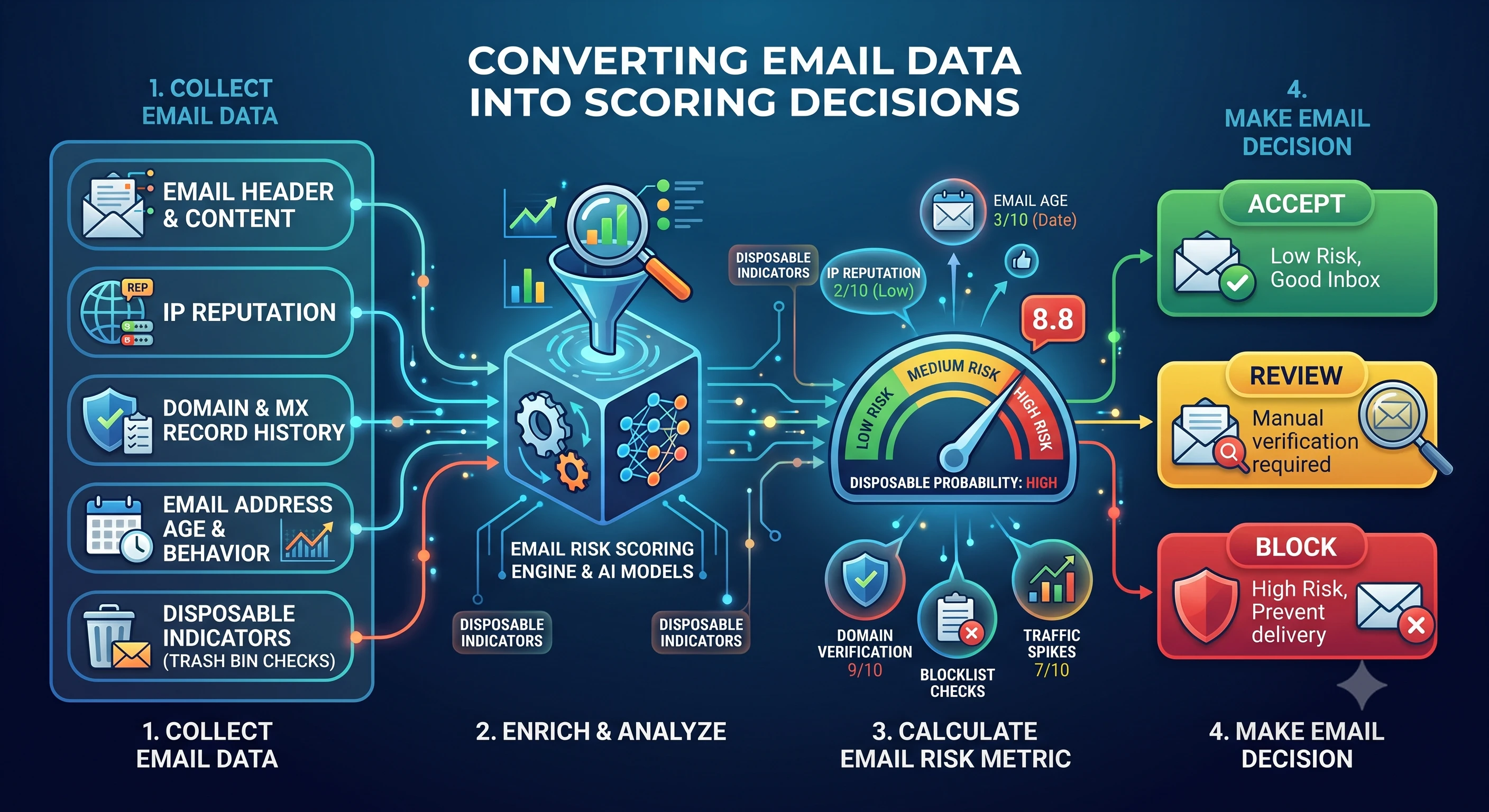
Email intelligence is only useful if the product can act on it. A response payload should not create a debate at signup time. It should support a small set of decisions that engineering, product, and support teams all understand.
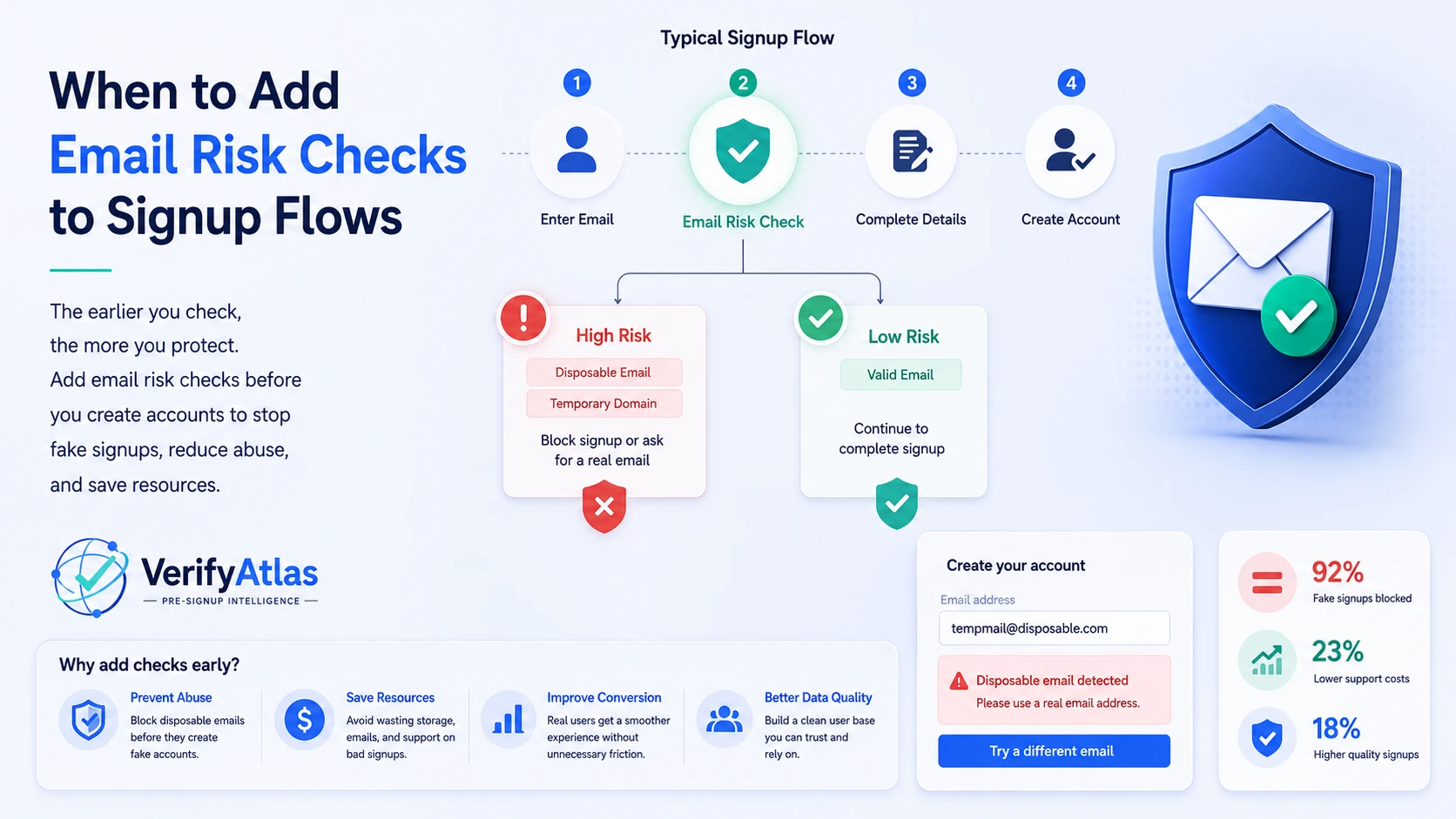
A practical model is to group outcomes into allow, review, and block. Allow means the signup continues normally. Review means the user needs more verification or limited access. Block means the signup should not continue with that identifier.
Start with high-signal fields
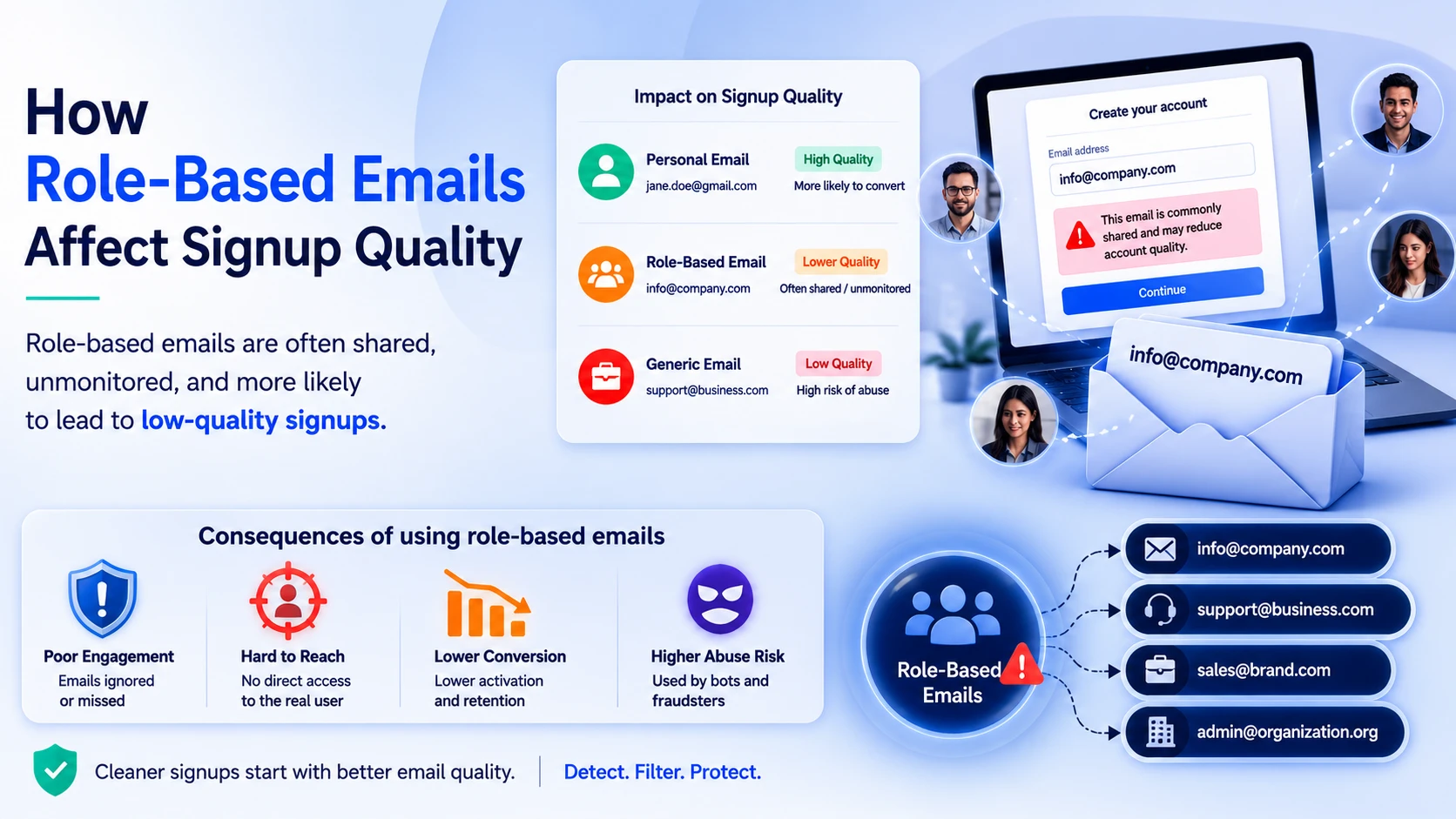
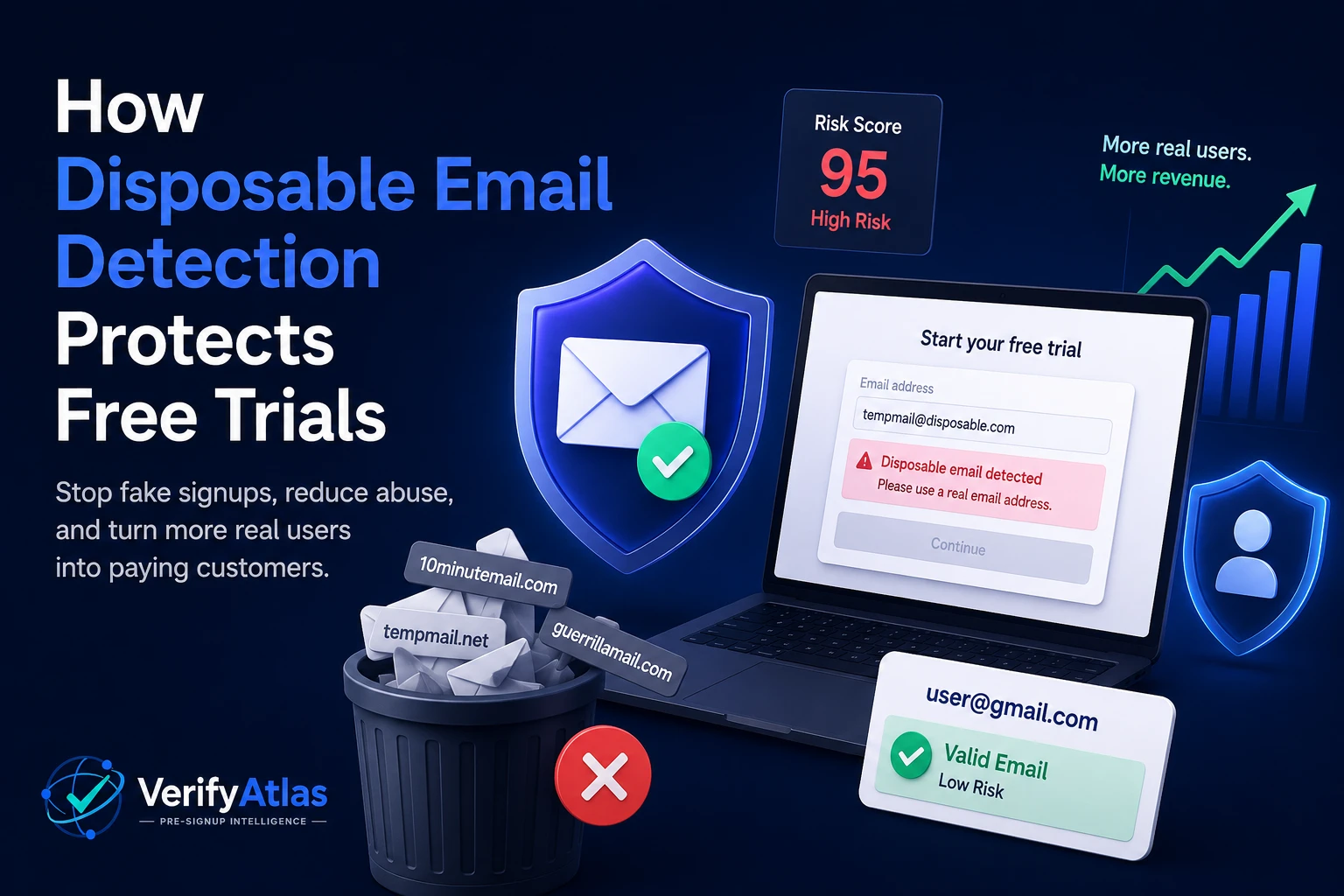
Disposable email status is usually the clearest block signal. Invalid input should stop the flow immediately. Role-based mailboxes and plus aliases often sit in the review bucket unless your product has a strong reason to block them.
Provider name, corporate mail status, and confidence level help refine the decision. A business domain with high confidence may be low risk, while a temporary provider with high confidence should be handled more strictly.
Keep the policy readable
The best signup risk policy is boring in a good way. It is easy to test, easy to explain to customers, and easy to change as abuse patterns evolve.
VerifyAtlas returns direct fields so teams can build that policy without burying the decision inside unclear scoring logic.