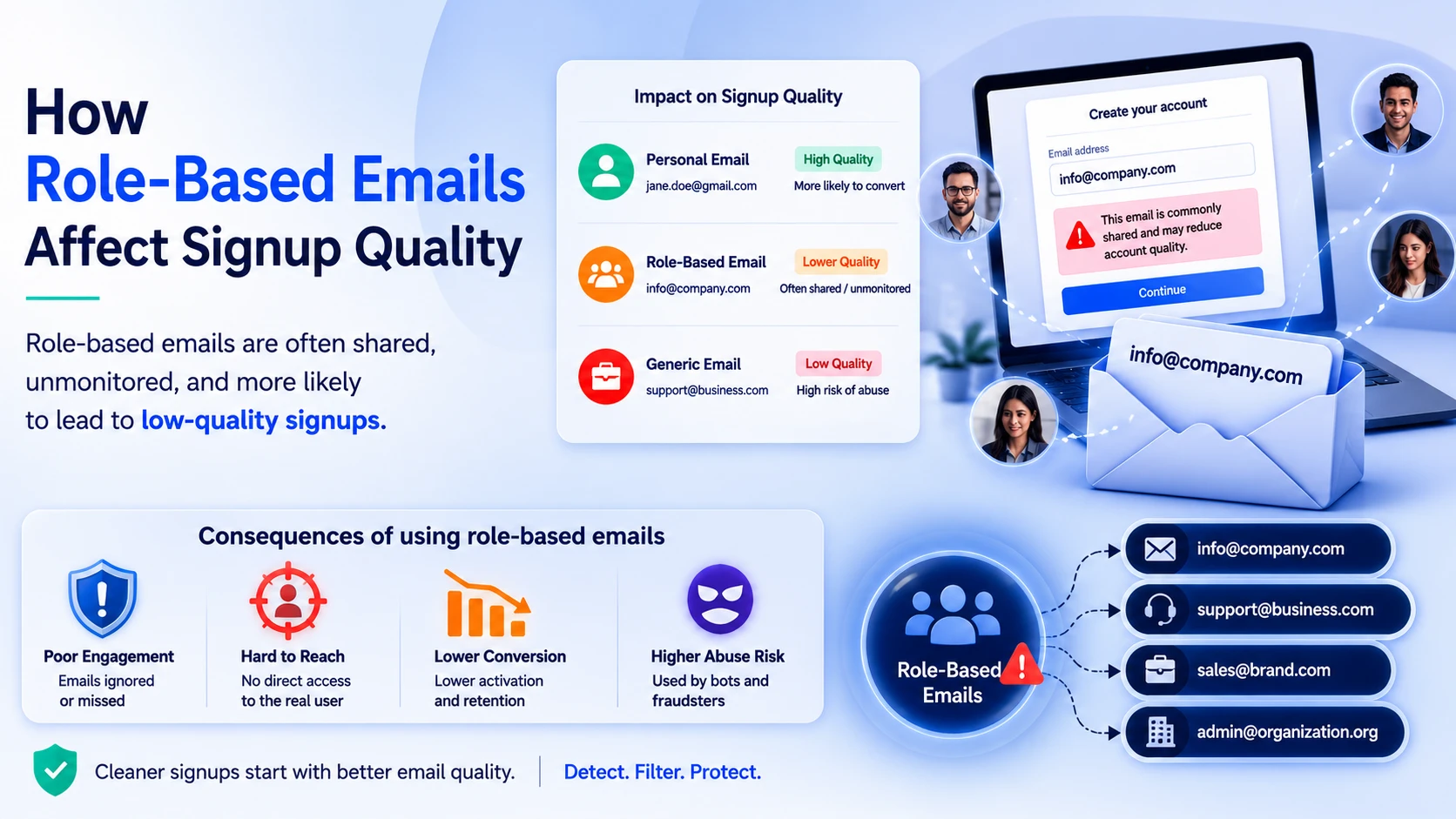
Role-based email addresses such as support, admin, billing, or sales can be perfectly legitimate. They can also make signup quality harder to understand because the address is tied to a function rather than a person.
That distinction matters during onboarding. A named business email often maps cleanly to one user. A shared mailbox can represent a team, a vendor, an alias, or an account that several people can access.
Why role mailboxes deserve attention
Role addresses can reduce accountability in products where identity, ownership, or usage limits matter. They may also produce weaker lead signals because follow-up, activation, and billing conversations can land in a shared inbox.
That does not mean every role mailbox should be blocked. For B2B products, addresses like billing or security may be expected. The better approach is to classify the signal and decide what your product should do next.
Useful policy options
Many teams accept role-based emails for low-risk workflows, request a named address for trials, or add extra verification before granting credits and sensitive permissions.
VerifyAtlas exposes role signals so your signup flow can treat these addresses with context instead of guessing from a raw string.